

Are My Education Expenses Tax Deductible? A Small Business guide

Last week, a small business owner came to my office with a shoebox full of receipts—literally a shoebox—and asked me if she could deduct the $12,000 she’d spent on a digital marketing certification program. She’d already filed her taxes. The course was clearly related to her consulting business, but she’d left it off her return because her accountant friend told her “education isn’t deductible anymore.” I had to break the news that she’d overpaid by thousands of dollars, and now we’d need to file an amended return.
This conversation happens more often than you’d think, and it points to a massive disconnect between what business owners believe about tax deductions and what’s actually available to them. The rules around education expenses are particularly misunderstood, sitting at this strange intersection of business development, personal growth, and IRS scrutiny. But here’s the thing: when you understand how to properly categorize and document education costs, they become one of the most powerful tools for reducing your tax burden while simultaneously building a more valuable business.
The confusion starts with how the IRS defines “qualified education expenses” for businesses versus individuals. Most people remember education credits like the Lifetime Learning Credit, which have strict income limits and specific qualifying criteria. Those are completely different from business education deductions. When you’re operating a business—whether that’s a corporation, LLC, or side hustle—the rules shift dramatically.
A freelance graphic designer I worked with wanted to expand into web development and enrolled in a $15,000 coding boot camp. She initially thought this was a personal expense. But she was already doing web-adjacent work, had clients asking for website updates, and the skills would directly enhance her existing business offerings. That entire $15,000 became a fully deductible business expense.
The IRS allows you to deduct education expenses if they maintain or improve skills required in your current business, or if they’re required by law or regulation to keep your current business status. The key phrase there is “current business.” You can’t deduct education that qualifies you for a new trade or business, even if you plan to use those skills in your existing business eventually. This is where people trip up constantly.
Here’s a real-world example
if you’re a real estate agent taking continuing education to maintain your license, that’s 100% deductible. But if you’re a real estate agent going to law school to practice real estate law, that tuition isn’t deductible because the IRS considers law a different profession, even though it’s related.
But when the education clearly maintains or improves your current business skills, you’re in solid territory. I’ve helped business owners deduct everything from industry-specific conferences and certification programs to online courses, workshops, and even books and subscriptions that directly relate to their field. The documentation is what makes or breaks you here. You need to be able to show the connection between the education and your current business operations.
Speaking of documentation, this brings me to one of the biggest mistakes I see: not keeping adequate records of deductible expenses. It’s not enough to have spent money on something legitimate. You need to prove it. I’ve watched thousands of dollars in legitimate deductions get disallowed during IRS audits simply because documentation was sloppy.
For education expenses specifically, keep course descriptions, enrollment confirmations, receipts, and notes about how the education relates to your current business. If you’re traveling for education, it gets more complex. The education needs to be the primary purpose, and you need to document both components.
One client runs a boutique marketing agency and attended a three-day conference in Austin, extending her stay for the weekend. The conference registration, hotel during the conference, and flights were deductible. Weekend hotel nights were not. She kept all receipts together, which made record-keeping messier. The lesson: separate business from personal in real-time.
The concept of 100% deductible expenses is another area where I see confusion and mistakes pile up. Some business expenses are fully deductible in the year you incur them, while others need to be capitalized and depreciated over time. Understanding which category your expenses fall into can significantly impact your tax strategy, especially in high-income years where you’re looking to offset revenue.
Education expenses, when they qualify as business expenses, are generally 100% deductible in the year you pay them. That boot camp my graphic designer client took? She paid the $15,000 in 2024, so she could deduct the full amount on her 2024 return, even though the program ran for six months and finished in 2025. This is the cash method of accounting at work, which most small businesses use. You deduct expenses when you pay them, not necessarily when you receive the benefit.
Compare this to purchasing a computer for your business. A $3,000 laptop can typically be fully deducted in the year of purchase thanks to Section 179 expensing or bonus depreciation. But without those provisions, you’d depreciate that computer over five years. Education expenses don’t have this depreciation requirement—they’re currently deductible when they meet IRS criteria.
Other 100% deductible expenses include office supplies, business insurance, professional fees, advertising, and software subscriptions. The common thread is that these are ordinary and necessary expenses for running your business. The IRS uses those exact words. Ordinary means common and accepted in your industry. Necessary means helpful and appropriate for your business.
I had a client who tried to deduct a $8,000 wine-tasting course in Napa Valley. He owned a small accounting firm. His argument was that he needed to understand his high-net-worth clients better, many of whom were wine collectors. The IRS didn’t buy it. Wine expertise isn’t ordinary or necessary for an accounting practice. If he’d been a sommelier, restaurant owner, or wine distributor, we’d have had a completely different conversation.
The meals and entertainment category deserves mention because the rules changed significantly and people are still catching up. The Tax Cuts and Jobs Act eliminated entertainment deductions while keeping 50% deduction for business meals. During COVID, there was temporary 100% deduction for restaurant meals. As of 2024, we’re back to 50% for most business meals.
The complexity of these rules is why understanding taxation fundamentals becomes crucial. The landscape shifts constantly. Mastering taxation fundamentals isn’t just about numbers—it’s about understanding strategic implications of different expense categories and timing.
One client pursued an MBA to strengthen her business acumen and scale her boutique clothing stores regionally. The MBA itself—because it’s a degree program that could qualify her for new careers—isn’t deductible as business education. However, individual courses that directly maintain her current retail skills might be. We had her business pay for Retail Operations, Supply Chain Management, and Financial Management as business education, while she personally paid for general courses like Corporate Finance and Business Law.
This is the kind of strategic parsing that saves money without crossing ethical or legal lines. When clients ask me whether an online MBA is worth it from a tax perspective, my answer is always: it depends on your business structure and how you use the education. The ROI calculation gets much more favorable when you can deduct substantial portions of the cost.
The biggest tax mistakes I see cluster around a few themes. First, mixing personal and business expenses in ways that make everything questionable. If you’re using your business card for personal purchases, you’re creating red flags. I recommend separate credit cards and bank accounts—basic, but many resist this.
Second, people either over-deduct or under-deduct out of fear. Over-deducters claim clearly personal expenses as business costs. I’ve seen questionable home office deductions, vehicle expenses for personal cars, and family vacations disguised as business travel. This triggers audits, and the IRS finds other problems too.
Under-deducters leave money on the table from fear of audits. They don’t claim legitimate home offices, skip mileage tracking, or pay for continuing education out of pocket. Good education about what’s actually deductible is worth its weight in gold.
Third, timing mistakes cost money every year. Someone prepays for a two-year subscription in December but only deducts one year. Or they pay for a course in December but wait to deduct it the following year. Under cash method accounting, the deduction typically goes to the year you paid.
The impact of tax law changes is another area where business owners fall behind. The tax code shifts more frequently than people realize, and provisions that seemed permanent have expiration dates built in. The qualified business income deduction under Section 199A, for example, is scheduled to expire after 2025 unless Congress extends it. Bonus depreciation percentages change yearly. State and local tax deduction limits impact how you structure your business.
Staying current isn’t just about avoiding mistakes—it’s about spotting opportunities. When the 100% bonus depreciation was available, smart business owners accelerated equipment purchases to maximize their deductions. When the employee retention credit became available during COVID, businesses that moved quickly could claim significant refunds. These opportunities don’t wait for you to notice them.
Let me give you a practical framework for education expenses as business deductions. Ask whether the education maintains or improves skills you currently use. If yes, ask whether it’s required by law for your current business. If either answer is yes, you’re likely in deductible territory. Then ask whether it qualifies you for a new profession. If yes, it’s probably not deductible.
Document everything. Keep course descriptions, receipts, and confirmation emails. Write a brief memo about why this education is necessary for your business. If traveling, document the business purpose and keep the agenda. This takes five minutes now and could save thousands later.
Consider timing strategically. If you’re having a high-income year, accelerating deductible expenses makes sense. If expecting lower income next year, you might delay payment until January. This isn’t evasion—it’s legitimate tax planning.
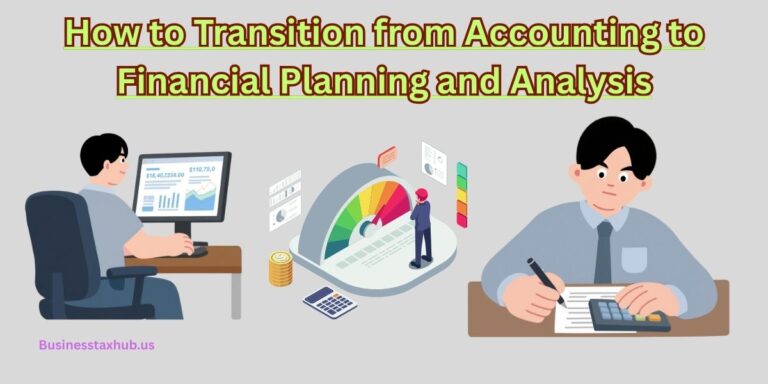
For those transitioning careers or expanding their business into new areas, the question of deductibility becomes more nuanced. If you’re transitioning from accounting to financial planning and analysis, for example, education that enhances your financial analysis skills while you’re still working as an accountant is likely deductible. Education that’s purely about planning roles you don’t yet have would be questionable.
The reality is that education forms the backbone of business growth in the modern economy. Whether you’re a solo consultant, small business owner, or running a side hustle, the tax code generally supports legitimate business education. The key word is legitimate—the education needs to genuinely serve your current business.
When I work through these questions with clients, I find they have more legitimate deductions than they realized, but they’ve been claiming some questionable ones that need correction. The sweet spot is aggressive but defensible. Claim everything you’re entitled to, but nothing that would raise eyebrows.
Looking at the ROI of education decisions, the tax deductibility can shift the entire calculation. A $10,000 course that’s fully deductible has a real cost of $6,000-$7,000 for most business owners once you factor in the tax savings. That changes whether the investment makes sense, especially for education that might have marginal value to your business.
The interplay between business expenses, personal growth, and tax strategy requires honest assessment. Not everything that helps your business is deductible, and not everything that’s deductible is worth doing. The goal is to run a better business and minimize your legal tax obligation simultaneously, without letting the tax tail wag the business dog.
I encourage every business owner to audit their expense tracking yearly. Look at what you’re deducting and ask honestly whether it meets IRS criteria. Look at what you’re not deducting and ask whether you’re leaving money on the table.
The process of categorizing expenses correctly—understanding what’s 100% deductible, what’s partially deductible, what needs depreciation, and what’s not deductible—is fundamental to accurate filing and smart planning. This isn’t just compliance; it’s understanding your business’s financial reality.
As you think about your business and education investments you’re considering, approach tax implications with both optimism and caution. The rules favor legitimate business education, but require proper application and documentation. Work with a tax professional who understands your specific business. And keep learning—ironically, education to better understand business taxes might itself be deductible.
The conversation with that business owner and her shoebox ended with an amended return and a refund. More importantly, it ended with her implementing a simple tracking system. That system has saved her countless hours and thousands of dollars. Sometimes the most valuable business education isn’t a formal course—it’s learning to navigate the tax code strategically and build processes that support both business growth and tax efficiency.
Disclaimer: The stories and strategies shared in this article are based on personal professional experience and are for educational purposes only. Tax laws are subject to change and vary by individual circumstances. This content does not constitute formal tax or legal advice. Please consult with a qualified CPA or tax professional before claiming these deductions.

Karthick Raja is an MBA-qualified Finance & HR professional and founder of Business Tax Hub, with 10+ years of hands-on experience managing finance operations, taxation, payroll compliance, and HR functions. He helps students and professionals navigate the U.S. corporate landscape by translating real-world business experience into practical, job-ready career growth.



One Comment