
How to Transition from Accounting to Financial Planning and Analysis

My former colleague Rachel made this exact jump three years ago. She’d been working in accounts payable for a mid-sized manufacturing company, and while she was good at her job, she felt stuck in what she called “the land of historical numbers.” She wanted to help shape decisions, not just record them. Last I heard, she’s thriving as an FP&A analyst and hasn’t looked back. In this article we will discuss How to Transition from Accounting to Financial Planning and Analysis
The good news? Accountants are actually really well-positioned for this transition. You’ve already got the financial foundation that trips up a lot of people trying to break into FP&A. But let’s be real—it’s not automatic, and there are some deliberate steps you’ll need to take.
Why Accountants Fit Into FP&A
Think about what you do every day in accounting. You’re working with financial data, understanding how transactions flow through systems, reconciling accounts, and making sure numbers tell an accurate story. That’s not nothing. FP&A teams need people who actually understand where the numbers come from and can spot when something looks off.
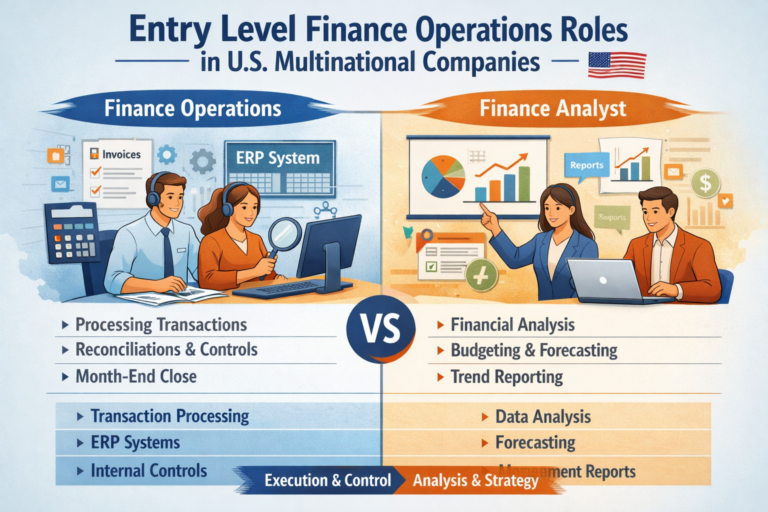
The difference is mostly about perspective and timing. Accounting looks backward—did we record everything correctly, do the books balance, what happened last quarter? FP&A looks forward and sideways—what’s likely to happen next quarter, what if we launch that new product, how does our performance compare to what we predicted?
But here’s something people don’t talk about enough: that backward-looking work you do in accounting is exactly what makes good forecasts possible. You can’t predict the future if you don’t understand the patterns in historical data.
The Skills Gap You’ll Need to Bridge
I’m not going to sugarcoat this part. There are some real differences in how you’ll need to think and work.
Excel becomes your best friend on a whole different level. Sure, you probably use it now for reconciliations and maybe some basic analysis. In FP&A, you’re building complex models that link assumptions to outcomes. We’re talking about variance analysis, sensitivity tables, dynamic forecasting models. If you’ve never built a three-statement financial model or don’t know your way around INDEX-MATCH and pivot tables, that’s your first homework assignment. Learning practical financial modelling skills is essential for success in this role.
You’ll also need to get comfortable with ambiguity in a way that accounting doesn’t really prepare you for. In accounting, there’s usually a right answer—the debit equals the credit, the account reconciles or it doesn’t. In FP&A, you’re often making educated guesses. How much will revenue grow if we increase the sales team by 20%? What’s the realistic timeline for launching in a new market? Nobody knows for sure, and you have to get comfortable saying “based on these assumptions, here’s what I think will happen.”
The business partnering aspect can also feel like a stretch at first. Rachel told me her biggest adjustment was learning to translate financial implications into language that operations managers and marketing directors actually cared about. Instead of “operating expenses increased 12% versus prior year,” it became “we’re spending about $150K more per month than we budgeted, mainly because we’ve added three people in customer service—which makes sense given call volumes are up 30%.” Developing soft skills for finance professionals can make this transition much smoother.
Strategic Moves for Making the Transition
Some people try to make this jump by applying cold to FP&A roles at other companies. That can work, especially if you’ve got a strong resume otherwise, but it’s harder than you might think. Recruiters see “Accountant” on your resume and sometimes can’t envision you in the analyst role.
The smoother path? Look for opportunities inside your current company first. This is exactly what Rachel did. She started volunteering to help with budget season, asking questions about how the FP&A team built their models, and offering to pull historical data they needed for analysis. When a junior FP&A position opened up, she already had relationships with the team and could point to examples of forward-looking work she’d contributed to.
If your company doesn’t have an FP&A function—which is the case at smaller businesses—you might need to create FP&A-type projects for yourself. Can you build a rolling forecast for your department? Put together an analysis of how different cost assumptions would impact profitability? Create a dashboard that tracks key metrics? These projects serve double duty: they make you better at the skills you need and give you concrete examples to discuss in interviews.
Professional development matters too, though I’d be selective about what you invest in. The FP&A certification programs exist, but honestly, hiring managers care more about demonstrated skills. A GitHub repository with Excel models you’ve built or a portfolio of analysis projects will probably serve you better than another acronym after your name. That said, if you’re weak on financial modeling specifically, a structured course can accelerate your learning.
Different Destinations in the FP&A World
Here’s where it gets interesting—FP&A isn’t just one thing. Corporate FP&A at a large company looks different from FP&A at a startup, which looks different from working in FP&A at a private equity firm.
Corporate FP&A tends to be more structured. You’re working on budgets, forecasts, board presentations, and variance analysis. The pace follows a calendar—month-end, quarter-end, annual planning. If you like the financial rigor of accounting but want more strategic input, this is probably your sweet spot. Understanding entry-level finance operations roles at larger organizations can help you target the right opportunities.
Startup or high-growth company FP&A is wilder. You might be building the financial infrastructure from scratch, dealing with rapidly changing business models, and wearing multiple hats. One week you’re modeling fundraising scenarios, the next you’re analyzing unit economics for a new product line. It’s exciting if you like variety and can handle ambiguity.
There’s also a distinction worth understanding between FP&A and personal financial planning. Some people hear “financial planner” and think about helping individuals with retirement accounts and investment strategies. That’s a totally different career path with different certifications (CFP usually) and skill sets. It’s possible to go there from accounting too, but it’s not the same as FP&A, which is all about corporate finance.
The Reality Check
Let me be honest about one thing: your first FP&A role might feel like a lateral move or even a slight step back in seniority. If you’re a senior accountant, you might need to start as a financial analyst without the “senior” title. The pay might be comparable rather than a big jump. That can be frustrating.
But think about it as positioning for a different trajectory. FP&A roles often have more visibility with senior leadership because you’re involved in strategic decisions. Career progression can move faster once you’re in that world. Rachel took a lateral move on paper, but within two years she was presenting to the CFO regularly and got promoted to senior analyst. That wouldn’t have happened in her accounting track, at least not as quickly. Learning about real-world business insights can help set realistic expectations.
Making Your Case
When you’re ready to pursue FP&A opportunities, your pitch needs to emphasize transferable skills while being honest about what you’re trying to learn. Something like: “My accounting background means I really understand the integrity of financial data and can spot issues in underlying assumptions. I’ve been building my modeling and analytical skills through [specific projects], and I’m excited to apply that foundation to forward-looking analysis and business partnering.”
Bring examples. If you’ve done any variance analysis, budget support, or ad-hoc reporting in your accounting role, talk about that. If you’ve taken initiative to learn new tools or methodologies, mention it. Show that you understand FP&A is different from accounting and that you’re not just trying to escape your current role—you’re actively pursuing this specific opportunity. Make sure you know how to list cross-functional finance and HR skills effectively on your resume.
The transition from accounting to FP&A is absolutely doable. You’re not starting from zero—you’ve got a legitimate advantage with your financial foundation. You just need to build on it deliberately, get some practical experience with forward-looking analysis, and position yourself as someone who can bridge the gap between what happened and what’s coming next.

Karthick Raja is an MBA-qualified Finance & HR professional and founder of Business Tax Hub, with 10+ years of hands-on experience managing finance operations, taxation, payroll compliance, and HR functions. He helps students and professionals navigate the U.S. corporate landscape by translating real-world business experience into practical, job-ready career growth.