
How to Start a Career in Corporate Tax Compliance With an MBA

If you have ever looked at the corporate world and wondered, “How do people actually end up working in tax compliance?” — you are not alone.
Corporate tax compliance is one of those careers that most people never think about until they stumble across it. But here is the truth: it is one of the most stable, well-paying, and in-demand career paths available today — especially if you hold or are pursuing an MBA.
I have spent over 10 years working in finance, taxation, payroll compliance, and HR. And I can tell you firsthand — the combination of an MBA and real-world tax knowledge is a powerful career foundation. Before we get into the steps, I want to share something important: if you are still trying to figure out which direction to take your career, understanding real-world business insights and how the job market actually works is a great starting point. It changed the way I approached my own career decisions.
In this article, I am going to walk you through exactly how to break into corporate tax compliance, what skills you actually need, how your MBA becomes your biggest advantage, and — most importantly — a real case study of someone I helped navigate this exact path.
What Exactly Is Corporate Tax Compliance?
Before we dive into the career side, let us get on the same page about what corporate tax compliance actually means.
In simple terms, corporate tax compliance is the process of making sure a company follows all tax laws — federal, state, and sometimes international. This includes filing tax returns on time, calculating taxes correctly, and ensuring the business is not paying more than it should or less than it owes.
Companies like Google, Amazon, and JPMorgan Chase have entire departments dedicated to this. Why? Because one wrong move in tax compliance can cost a company millions in penalties, audits, and legal trouble. That is exactly why skilled tax compliance professionals are always in demand.
If you want to build a strong understanding of the technical side before you even apply for your first role, I highly recommend reading up on mastering taxation fundamentals and corporate law. It is one of the best foundational pieces I have written, and it will give you a head start that most candidates do not have.
Why Does an MBA Matter So Much in This Field?
A lot of people assume that to work in corporate tax, you need to be a Certified Public Accountant (CPA) or have a law degree. And while those credentials definitely help, an MBA opens doors that many people do not expect.
Here is why an MBA is a game-changer in this space:
Business Strategy Understanding
You understand how business decisions affect tax outcomes — not just the numbers, but the bigger picture. This is something pure accountants often miss.
Strong Financial Analysis Skills
MBA programs train you to read and interpret financial data with confidence. In tax compliance, that skill lets you spot compliance gaps and financial risks that others might overlook.
Leadership and Communication
Tax compliance is not done in isolation. You will work with legal teams, finance departments, and executives on a daily basis. Your MBA teaches you how to communicate complex ideas in a way that anyone can understand — and that is a skill employers pay a premium for. If you want to sharpen this further, check out my guide on soft skills for finance professionals and how to bridge the gap between data and people.
Global Business Perspective
Many companies operate across national borders. An MBA with international business exposure gives you a massive advantage when it comes to multinational tax compliance roles. If you are an international MBA graduate trying to navigate the U.S. corporate landscape, this article on navigating U.S. workplace expectations as an international MBA graduate is exactly what you need to read.
Step-by-Step: How to Actually Break Into Corporate Tax Compliance
Alright, now let us get into the actionable stuff. Here is exactly how I would approach this career path if I were starting fresh today.
Step 1: Build Your Educational Foundation
Start with a bachelor’s degree in accounting, finance, or a related business field. If you already have that, great. Now, layer on your MBA.
Look for programs that offer concentrations or electives in taxation, corporate finance, or accounting. Even if your MBA is a general one, the business and financial principles you learn will transfer directly into the tax world. One question I get asked all the time is whether an online MBA is worth it — and the honest answer is yes, if you pick the right program. I broke this down in detail in my article on the ROI of online vs. on-campus MBA and how it impacts mid-career promotions.
Step 2: Get Hands-On Experience — Even If It Is Entry-Level
Nobody starts at the top. Look for internships or entry-level roles at accounting firms, corporate finance departments, or payroll companies.
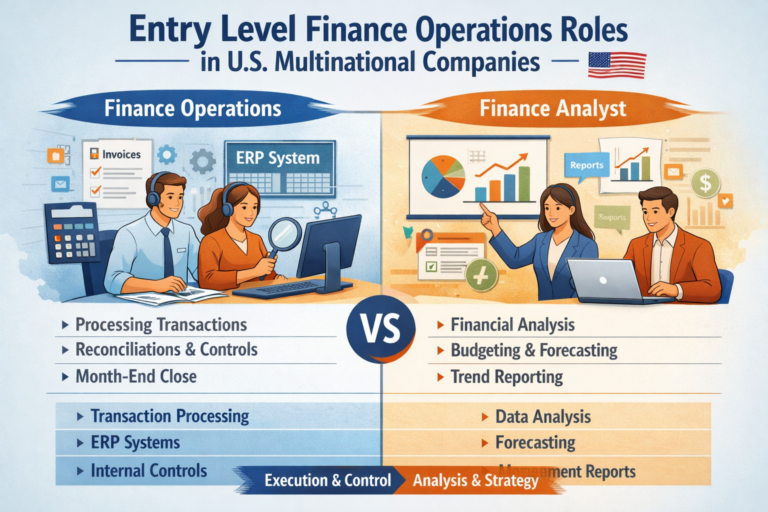
Firms like Deloitte, PricewaterhouseCoopers, Ernst & Young, and KPMG are excellent places to build a tax compliance foundation. Even working in payroll or basic bookkeeping gives you real exposure to how taxes actually work inside a business. If you are wondering exactly what entry-level finance roles look like inside U.S. multinational companies, I wrote a complete breakdown here: entry-level finance operations roles in U.S. multinational companies.
Step 3: Learn the Tax Laws Inside and Out
This might sound obvious, but a surprising number of people in the finance world have only surface-level knowledge of actual tax law. You need to understand federal tax rules, state and local tax obligations, payroll tax requirements, and — if you plan to work with larger companies — international tax regulations.
Tax laws change constantly, and when they do, the ripple effects hit payroll and HR compliance hard. I covered exactly how this works in my article on the impact of tax law changes on corporate payroll and HR compliance. It is essential reading if you want to stay ahead.
Step 4: Pursue Professional Certifications
While an MBA is a strong credential on its own, adding certifications like CPA (Certified Public Accountant) or EA (Enrolled Agent) will set you apart from the competition.
These certifications prove to employers that you have the technical depth to back up your MBA. And here is the good news — many companies offer tuition reimbursement for these programs, so do not let cost be a roadblock.
Step 5: Network and Position Yourself Strategically
Corporate tax compliance is a niche field, and the right connections genuinely matter. Join professional associations, attend industry events, and connect with tax professionals on LinkedIn.
Here is something people often overlook — your alumni network is one of the most underused tools in your career toolkit. I wrote about exactly why and how to leverage it in my article on alumni network value after graduation and why it still shapes careers. Positioning yourself as someone who understands both the business side and the technical tax side makes you memorable — and a lot more hireable.
Real Case Study: How I Helped Sarah Land Her First Corporate Tax Compliance Role
I want to take a moment here to share a real story. This is someone I personally guided through the process — and it is one of the reasons I created Business Tax Hub in the first place.
Who Is Sarah?
Sarah was a recent MBA graduate with a concentration in finance. She had a solid academic background, a few internships under her belt in general accounting, and a genuine interest in tax — but zero idea how to actually break into a corporate tax compliance role. She came to me frustrated, saying, “I have applied to 30 positions and heard back from almost none. What am I doing wrong?”
What Was the Problem?
After reviewing her resume and understanding her background, the issue became clear. Sarah had the right education, but she was not positioning herself correctly. Her resume was generic — it listed skills and coursework but did not tell a compelling story about why she was the right fit for tax compliance specifically. She also had no idea how to highlight the cross-functional value of her MBA.
This is actually one of the most common mistakes I see. I wrote about how to fix exactly this in my guide on how to list cross-functional finance and HR skills on a U.S. resume — and Sarah’s story was one of the inspirations behind it.
What Did We Work On Together?
We tackled this problem in three focused steps.
First, we rebuilt her resume around outcomes, not tasks. Instead of saying “Assisted with tax filings,” we repositioned it as “Managed quarterly tax filing processes for three business entities, ensuring zero compliance gaps.” That kind of language tells an employer what she can do, not just what she did.
Second, we filled her knowledge gaps fast. Sarah needed hands-on exposure to how tax law changes actually affect a real business — not just the theory from her MBA program. I pointed her toward the kind of practical, real-world content that connects the dots between classroom learning and corporate reality. Understanding how to align HR processes with corporate financial goals was a game-changer for her, because it showed her how tax compliance is not just a numbers job — it is a strategic one.
Third, we built her network with intention. Sarah started reaching out to tax professionals on LinkedIn, joined two industry groups, and attended a local finance meetup. Within three weeks, she had a referral from someone who worked at a mid-size accounting firm.
What Happened Next?
Six weeks after we started working together, Sarah landed an interview at a regional accounting firm for a Tax Analyst position. She walked into that interview confident, prepared, and — most importantly — able to articulate exactly why she wanted to be in corporate tax compliance and what she brought to the table.
She got the job.

Today, Sarah is thriving. She has already been promoted to a mid-level tax specialist role, and she tells me that the foundation we built together in those first six weeks made all the difference. Her story is proof that an MBA, combined with the right strategy and the right guidance, can open doors in corporate tax compliance faster than you might think.
Skills You Need to Succeed in Corporate Tax Compliance
Let me be straightforward with you — corporate tax compliance is not just about crunching numbers. It requires a smart mix of technical knowledge, analytical thinking, and soft skills.
Here are the key skills that top-performing tax compliance professionals rely on every single day:
Tax Law Knowledge
Understanding federal, state, and international tax regulations is non-negotiable. This is the core of everything you will do in this role.
Attention to Detail
One small error in a tax filing can trigger an audit or a six-figure penalty. Precision is not optional in this field — it is everything.
Financial Reporting
You need to read and interpret financial statements fluently. This skill is what connects your compliance work directly to the company’s bottom line. If you want to understand how financial data drives HR and business decisions, my article on how HR analytics improves financial performance will open your eyes to the bigger picture.
Research and Problem-Solving
Tax laws evolve constantly. The ability to research new regulations quickly and apply them correctly is one of the most valuable skills you can develop.
Communication Skills
You will regularly need to explain complex tax issues to people who are not in finance. Clear and confident communication is a must-have, not a nice-to-have.
Software Proficiency
Tools like SAP, Oracle, and various tax software platforms are used across the industry. Being comfortable with technology separates good compliance professionals from great ones.
Career Paths You Can Grow Into
Starting in corporate tax compliance does not mean you are stuck in one role forever. This field has a clear and exciting growth track — especially with an MBA behind you. Understanding how to climb the corporate ladder strategically is just as important as the technical skills. I covered the full playbook in my article on corporate ladder climbing strategies that actually work.
Here is what the progression typically looks like:
Tax Analyst (Entry Level)
This is where most people begin. You will assist with tax filings, research regulations, and support the broader compliance team. Think of this as building the foundation of your career.
Tax Specialist (Mid Level)
At this stage, you take ownership of a specific compliance area — maybe payroll tax, sales tax, or corporate income tax. You become the go-to person in your specialty.
Tax Manager
Now you are leading a team. You oversee compliance processes, mentor junior professionals, and work directly with senior leadership to develop tax strategies that protect the company.
Tax Director / Head of Tax
This is a senior executive-level role. You are responsible for the entire tax function of the company — strategy, compliance, risk management, and even tax planning for mergers and acquisitions.
What Can You Expect to Earn?
Corporate tax compliance is a well-compensated career path, and that compensation only grows as you move up.
Professionals with an MBA and a focus in taxation have been reported to earn an average salary of around $102,000. But as you progress into manager and director roles, your earnings can grow significantly — often landing between $130,000 and $180,000 or more, depending on the company size, industry, and location.
This is not a field where you have to sacrifice income to do meaningful work. You get both.
Common Mistakes People Make When Entering This Field
I have seen a lot of smart, motivated people stumble early in their career because of a few completely avoidable mistakes. Let me save you some trouble.
1.Waiting Until the Resume Is “Perfect”
Nobody has a perfect resume when they start. The most important thing is to get real experience and learn on the job. Stop waiting for the ideal moment and start applying.
2.Ignoring the Business Side of Things
If you only focus on tax rules and forget about how the business actually operates, you are going to struggle. Tax compliance professionals who understand business strategy are far more valuable to their companies.
3.Not Staying Updated on Tax Law Changes
Tax laws change all the time — sometimes dramatically. If you are not actively keeping up with those changes, you are already falling behind your peers.
4.Skipping Networking
The tax and finance world is surprisingly small. The people you work with and learn from early on will shape your entire professional path. Do not underestimate the power of building real relationships.
My Final Thoughts
Corporate tax compliance might not be the flashiest career path out there, but it is one of the most rewarding — especially if you value stability, strong compensation, and the chance to make a real, measurable impact on how businesses operate.
An MBA gives you a serious edge in this field by bringing together business thinking with the technical depth that tax compliance demands. It is a combination that employers actively look for.
If you are an MBA student or a recent graduate searching for a career that is both meaningful and financially rewarding, corporate tax compliance deserves a serious spot on your radar. Follow the steps I have laid out here, build your skills with intention, and you will be in a strong position to not just enter this field — but to thrive in it.
And if you want a full roadmap for planning your career from the ground up, do not miss my complete guide on building a career roadmap for students in the USA. It ties everything together beautifully.
Disclaimer: This article is for informational and educational purposes only. It does not constitute professional tax or financial advice. Please consult a qualified tax professional before making any decisions related to your tax or career planning.

Karthick Raja is an MBA-qualified Finance & HR professional and founder of Business Tax Hub, with 10+ years of hands-on experience managing finance operations, taxation, payroll compliance, and HR functions. He helps students and professionals navigate the U.S. corporate landscape by translating real-world business experience into practical, job-ready career growth.